Orthochem’s Calcium Propionate – Support local Manufacturers
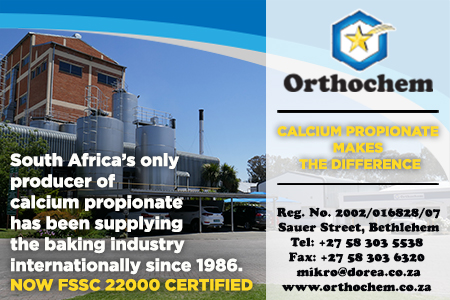
Orthochem’s Calcium Propionate – supplying the South African baking market since 1986
BUT FOR HOW LONG?
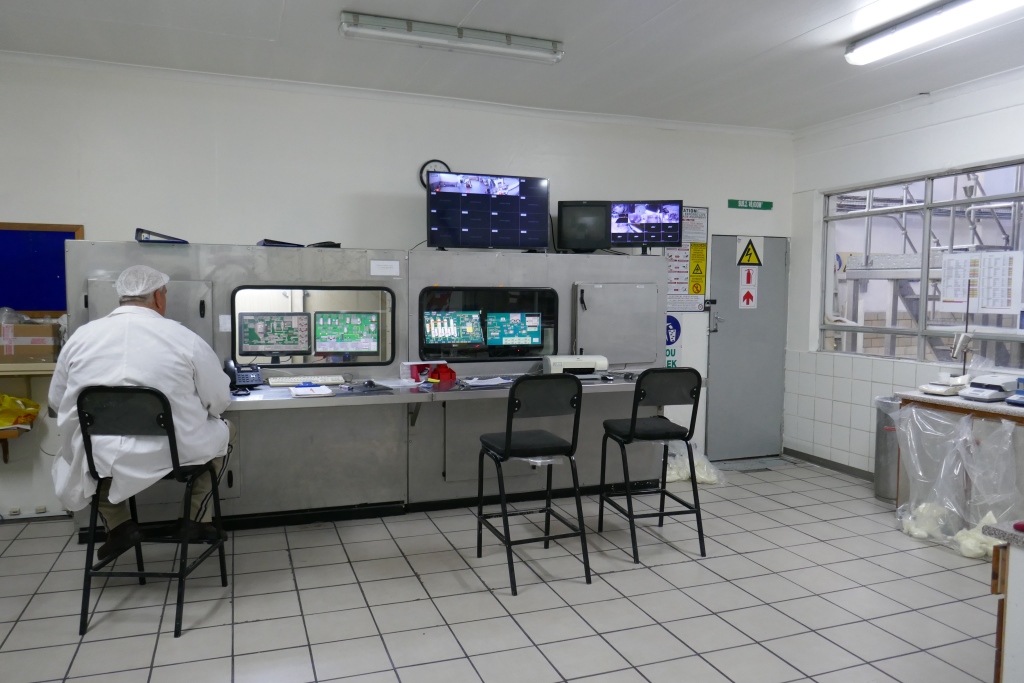
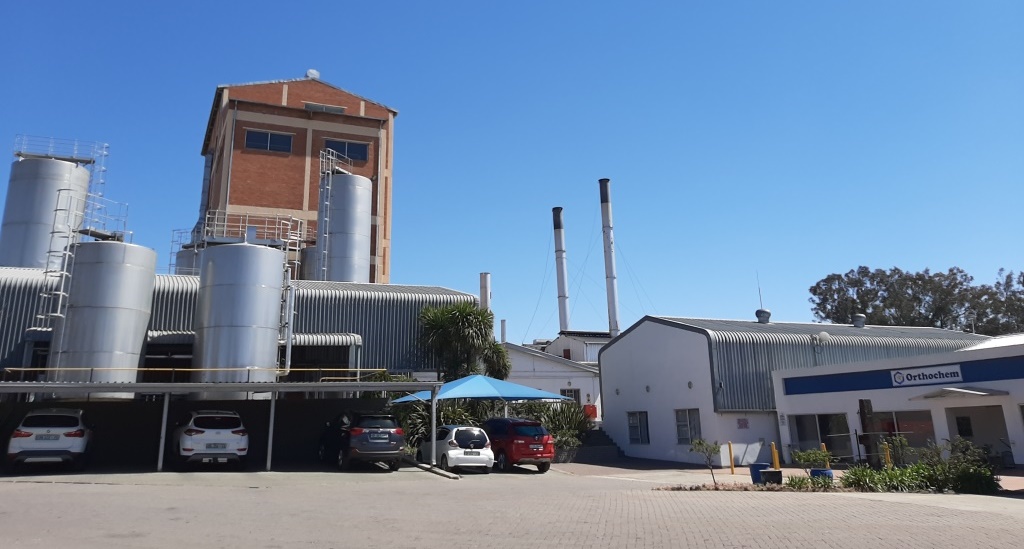
Orthochem is the only company that manufactures calcium propionate in South Africa and operates a state of the art production plant in Bethlehem, which is FSSC 22000 certified, as well as Kosher and Halaal.
Orthochem used to be the largest supplier of bread preservatives to South African bakeries but over the last 5 years it has been progressively displaced by cheap imports from China. These products are imported at dumped prices which makes it impossible for Orthochem to compete on a level playing field and calls into question the future viability of local manufacturing.
Having a local producer provides the baking industry with reliability of supply, which cannot be guaranteed to the same extent when products are fully imported. Further considerations are the twin dangers of another pandemic, leading to lockdowns like those that caused havoc with China-based supply chains during Covid, as well as the possibility of a conflict over Taiwan, which would severely disrupt global trade flows.
Bakeries should balance the immediate benefit of saving a few cents in a loaf with the risk of having production grind to a halt due to the unavailability of a very low input-cost, but nevertheless vital, ingredient.
Calcium proprionate is an organic salt formed by the reaction of lime with propionic acid (chemical formula Ca(CH3CH2COO)2) and is in essence a solid form of propionic acid, which makes it more convenient to handle and non-corrosive.
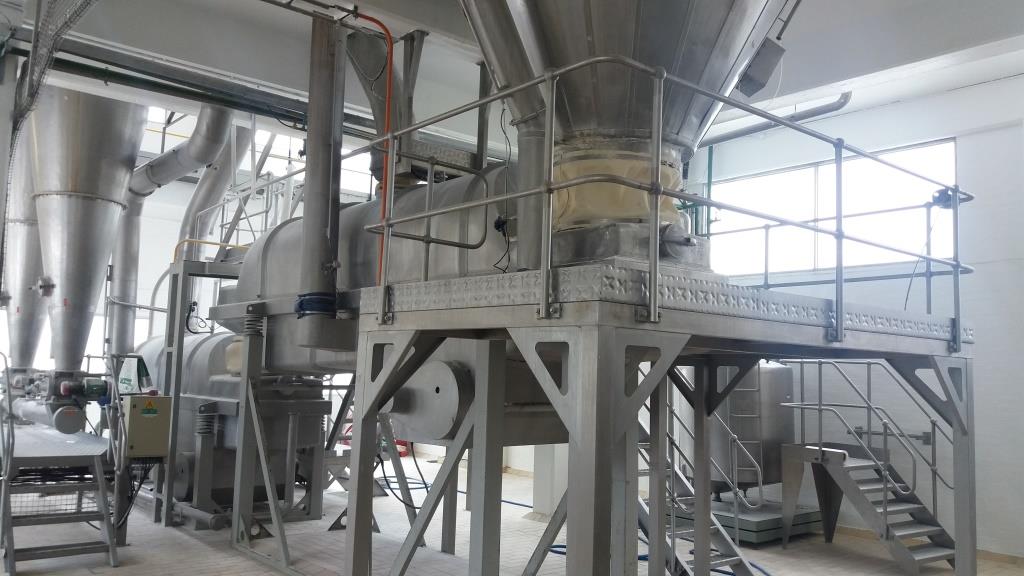
Propionic acid is chemically similar to the acetic acid of vinegar, differing by just one carbon atom. Very soluble in water, calcium propionate is generally sold in an agglomerated form as the powder grade generates dust during handling.
Its main purpose in the baking industry is that of a food preservative, assisting with the prevention of mould and rope in bread and other baked goods, which are frequent problems as the warm and moist nature of the bread production process and final product creates the ideal environment for the growth of moulds and bacteria.
Calcium propionate is an effective preservative as it inhibits the growth of moulds and other microorganisms, as well as some bacteria, including Bacillus Mesentericus, which causes rope. While calcium propionate is not lethal to these organisms, it inhibits their development, thus extending the mould and rope-free shelf life of the baked products.
Baking bread destroys any mould present in the bread dough, however, the bread is easily contaminated by airborne mould spores. Even the most stringent hygiene and HACCP procedures are unlikely to completely eliminate airborne mould spores. For this reason, a preservative such as calcium propionate is necessary if the finished product requires more than 2-3 days of mould-free shelf life.
Rope and mould are common problems in the baking industry and its distribution chain, which provides the ideal warm and moist environment for mould to thrive. Sliced, plastic-wrapped bread is very susceptible to mould.
The rate of mould development on bread is affected by numerous factors such as the recipe used, the number and type of mould spores in the environment, storage temperatures and humidity, so using an effective preservative will extend the mould-free shelf life of the product from 2-3 days to 5-6 days, minimising returns and ensuring customer satisfaction.
The effectiveness of calcium propionate is a function of the acidity of the medium as the compound is an effective anti-microbial / anti-fungal agent only in its undissociated or free acid form. The amount of free acid decreases exponentially as the pH rises so the preservative will be more effective in more acid breads such as white or sour dough bread compared to brown bread.
Calcium propionate is also widely used in other food products that do not contain yeast, but bread remains by far the largest market segment. It has been widely used in baking since the 1930’s and is today the most common preservative used in baked goods in South Africa as well as worldwide.
This is due to its numerous beneficial characteristics. In terms of safety, studies indicate that calcium propionate is one of the safest additives used by the food industry. So, despite the common consumer resistance against preservatives, there is no clinical proof that calcium propionate is harmful to humans, even at levels much higher than those used in bread and other foods.
As such, it has been used worldwide for many decades and is considered safe, subject to the maximum dosage, by all the major food safety authorities.
Calcium propionate is also favoured by the baking industry because it is yeast friendly. At the highest dosages, it can have a minor inhibiting effect on the yeast and thereby reduce bread volume but at normal dosage levels, calcium propionate has little or no effect on yeast activity.
Among the preservatives available to the baking industry, calcium propionate belongs to the group that has the smallest effect on the yeast, making it the product of choice for yeast-leavened products. Furthermore, calcium propionate is a source of calcium, providing a nutritional benefit. While offering all these advantages, calcium propionate has no effect on the taste or flavour of the baked goods.
A propionic acid odour may be noticed when the bread is still hot, but it rapidly disappears during cooling. The most important consideration, of course, is the correct dosage, to eliminate waste and reduce costs, while ensuring optimal results.
Because many factors affect the rate of mould growth on bread, the usage level of calcium propionate cannot be correlated exactly with the extension of the shelf life. In general, for standard bread recipes, a concentration of 0,2% – 0,4% calcium propionate based on flour mass is recommended, but dosages must be optimized by doing baking trials for each bread recipe.
Calcium propionate is cost effective and easy to use. The cost amounts to around R0.08 per standard loaf of bread and it can be added with the other minor dry ingredients as part of a premix or separately at the start of the dough mixing process.
Of course, as with all other ingredients, there are some issues to consider. While calcium propionate is a proven, safe product, it is manufactured synthetically and is classified as an artificial preservative. Current labelling legislation requires preservatives to be declared on any food product label.
According to international labelling standards, calcium propionate is declared on packaging with its E number E282. Its use must be declared even if it is contained in a premix supplied by an external supplier.
For more info on ORTHOCHEM click here …..
