Pan Releases

Pan releases remain prevalent to facilitate efficient release of baked goods.
Even as pan glazers with state-of-the-art permanent pan glazes and bakery equipment manufacturers throw massive resources behind the elimination of sticking points in the baking process, the use of pan releases remains prevalent to facilitate efficient release of baked goods.
The loaf of bread that sticks to the pan never gets sold. Neither does the bun or the cake that is stuck. High speed production of huge volumes of pan bread, soft buns and cakes would be impossible without some release treatment to ease depanning, especially where the depanning is automated.
Many doughs and batters require side support during baking, while other products take their shape from the pan. And where dough and pans come together, the moisture and heat that are part and parcel of the baking process will ensure that the dough sticks to any untreated pan sides and bottoms.
For this reason, commercial bakers use silicone-blazed and other glazed baking pans, but even these pans often require some release agent to protect the coating itself, to extend the life of the coating and to prevent frequent de-carbonning and re-glazing.
After the dough is divided, the dough balls are placed in pans that have been pre-treated with a uniformly applied release agent commonly referred to as depanning oil or pan oil, which facilitate the smooth release of the baked product from the pan. Since the release is subjected to the same high temperature as the baked goods, its properties when heated dictate the right choice. For this reason, release oil formulations are more highly developed and researched than, for example, divider oil or trough grease.
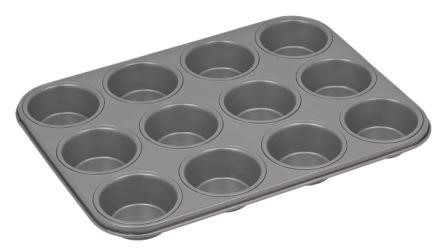 Release agents are applied in thin layers on the baking pans, and although only small amounts are used, the proper selection and performance of a release agent is critical to ensure that baked goods are released effortlessly and in a saleable condition.
When selecting a pan release or reviewing a previous selection, two main issues need careful consideration – the pan release itself and its application.
A number of pertinent questions must be answered about the pan release itself before a decision can be made. The selection of the right release agent is not only driven by technical performance, but also by a host of regulatory, allergen and health and safety concerns.
Is the release safe and suitable for human consumption as per the legal requirements? Since the release agent is in direct contact with the baked goods, this is possibly the most crucial question of all. Also look for certification of quality from, for example, the SABS. In addition, consider if the release is Kosher and/or Halaal certified.
Should mineral oil be preferred over vegetable oil as a base, or vice versa, given your specific requirements? Mineral oils are generally colourless, odourless and tasteless, and are also stable against polymerisation and staining of the product.
However, mineral oils may have smoke points that could result in smoke in ovens. Vegetable oils with their higher smoke points are more resistant to oven smoking, but are more prone to polymerisation during heating, which could result in gumming on the pans.
Vegetable oil can carbon the pan surface at temperatures of 180°C to the extent that the effect of the silicone glaze is negated. When the cost of bread sticking becomes prohibitive, the pans have to be de-carbonned and re-coated. In addition, vegetable oils can become rancid over time.
If selecting an oil-based release, also take care to understand what oil it is based on. Soy oil is often used due to its abundance and low cost. If soy – which is an allergen – is present, this may have to be declared on the label. The same goes for oils that are GMO.
A compromise between mineral oils that could smoke and vegetable oils that can polymerise is a blend of mineral and vegetable oils with stabilisers such as antioxidants added. By varying the ratio of mineral to vegetable oil, the right balance of properties can be achieved.
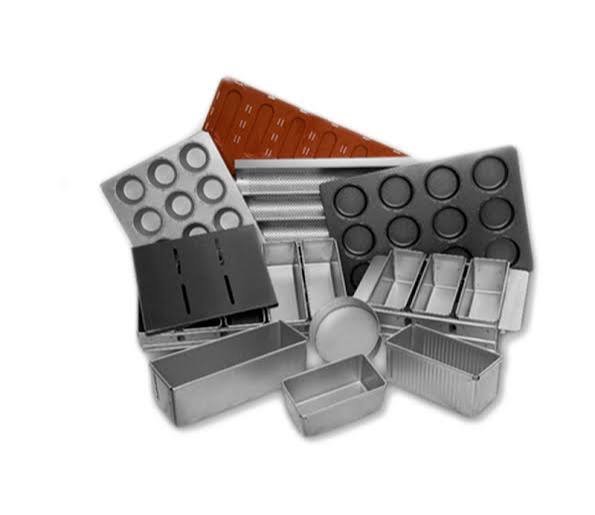 A more recent alternative is silicone emulsions which are water-soluble, non-gumming and carbon-free. Because the silicone emulsions can withstand temperatures of up to 305°C, it produces no carbon build up. Previously, silicone was not used because of the high cost of silicone oil and the difficulty in creating an emulsion from it. Now that technology has created solutions to these challenges, silicone emulsions offer a truly comprehensive pan release solution worth investigating.
Further questions must also be answered regarding the application of the release agent, since a consistent, thin, oily film is all that prevents the sticking that results in product defects that increase waste and eats into profits as defective baked goods are disposed of.
How will the release agent be delivered, stored and prepared for use within the bakery? Releases are commonly sprayed under pressure – whether by handheld or conveyor systems – but these systems must produce minimal airborne spray. An alternative is an airless system, which has been proven to reduce overspray, saving money and reducing cleaning costs.
What is the optimal amount of release to be used? This will depend not only on the product being released but also on the type of release agent. Obviously, the objective is to use the minimum amount of release that will still yield an efficient release of an undamaged product.
One release agent may be more expensive than another on a litre-per-litre comparison, but if less of the more expensive release is required to produce the same results, the release that appears more expensive initially may be the more cost-effective option. Cheap is often more expensive in the long run.
How will the release be applied to ensure a thin, uniform, full coverage and a slick release surface that allows the product to slide out without sticking? Over-application of a release agent is not the solution to problems in achieving uniform coverage – this merely wastes the release agent and can result in puddles of release agent, which, once broken down chemically, can result in gumming of the pans which will require time-consuming and costly cleaning.
Over-application may well also result in equipment surfaces being sprayed, which will require further cleaning.
Speak to the equipment supplier for specific advice pertinent to your unique equipment and equipment settings requirements.
In general, the supplier will provide a recommended initial setting for each product line and these would then have to be fine-tuned through trail-and-error by, for example, nozzle adjustment, air pressure adjustment and storage temperature adjustment to ensure the release is used at the right viscosity for maximum coverage. Those who have implemented an airless spray system seem to agree that its efficiency is impressive.
There are also speciality release agents that are used for special baking processes, such as band oven baking and high-temperature baking.
TEFLON COATING
Teflon™ coating of bakeware is another option aiding in the release of baked products. This non-stick coating can eliminate the need for secondary release agents in a bakery. Making depanning easier and faster because the product can be depanned while still warm. In bakeries where Teflon™ coated bakeware is used baking cycles are also increased, because there is no cleaning time between bakes.
All these options and considerations highlight one important fact: choose a reputable supplier that can provide solid advice based on extensive experience and expertise and make sure that all the relevant questions are thoroughly considered and answered before making this important decision – the wrong choice can truly leave your bakery in a sticky situation!
Suppliers in South Africa include Silcoat, South Bakels, Thermaspray and Chemplus to name but a few –
SILCOAT

Taking the Stick Out of Commercial Baking
In commercial baking, a loaf, bun or cake that sticks to the pan is more than a frustrating production problem — it is a product that may never reach the customer.
As bakeries increase production speeds and automation, reliable pan release has become essential for maintaining quality, reducing waste and keeping production moving.
Even modern silicone-glazed and coated baking pans can benefit from an effective release agent. Applied correctly, pan release creates a thin, uniform barrier between the baked product and the pan, helping ensure clean, consistent de-panning while also protecting pan surfaces.
SILCOAT Pan Release Emulsion offers a silicone-based approach to this challenge. Designed for the baking industry, the water-soluble emulsion is non-gumming and carbon-free, helping minimise the build-up that can result from conventional oil-based releases and can withstand temperatures of up to 305°C.
However, the release agent is only part of the equation. Consistent application is equally important. Over-application wastes product and can contribute to unwanted deposits, while insufficient or uneven coverage can result in sticking and damaged products.
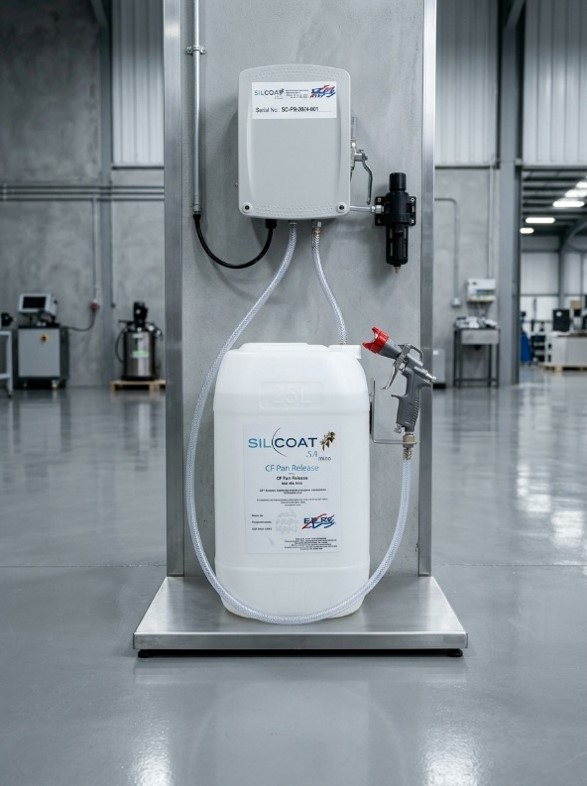 SILCOAT addresses this with application systems suited to different bakery operations. The Uzzi Wall Mount provides a manual solution for smaller bakeries, while the Fully Automatic Spray System is designed for high-speed conveyor production. The Multi Sprayer System provides controlled application for BO3/4/5 bread pans, delivering approximately 1–2 grams per pan.
SILCOAT also offers a 20-litre concentrate that is diluted with water to produce 120 litres of finished product, providing an efficient option for operations looking to reduce transport and handling costs.
For ALL bakeries, the right pan-release solution can mean fewer rejects, less cleaning and greater consistency — turning a small production detail into a meaningful contribution to overall efficiency.

For more info click here …. https://silcoat.co.za/
SOUTH BAKELS

South Bakels – We manufacture and distribute a wide range of premixes, Release Solutions and specialised ingredients, some of which are tailor made for industrial and in-store bakeries while others are specifically developed for the Craft and Foodservice sectors.
Products are formulated to suit each market sector, and South Bakels has well established sales and technical teams focusing on serving the particular needs of every customer.
Serving specific customer needs does not stop at product development and technical support. Packaging (from small packs to tanks) and equipment to support product application are also tailored to ensure that whatever size our customers are, whatever products they are producing, South Bakels can supply appropriate products and support.
South Bakels’ range of release agents is designed to help bakers achieve consistent, professional results while improving production efficiency. Whether spraying, brushing, or coating tins and baking surfaces, Sprink, Release 30, Tincol, and Tinglide all provide excellent release performance, helping products come away cleanly while reducing waste, product damage, and cleaning time. These trusted solutions support smoother operations, improved product appearance, and enhanced productivity in both artisanal and industrial bakeries. With a release agent to suit a variety of baking requirements, South Bakels delivers dependable solutions that help bakers achieve quality results every time.
Bakels Sprink Non-stick Spray
 A Canola Oil based non-stick spray.
INTENDED USE:
This is a non-stick spray that is specially formulated to aid the release of baked goods from pans and moulds. Shake well. Hold the can upright about 15-20 cm away from cold surface. Spray evenly to ensure that the entire surface is covered well.
Release 30
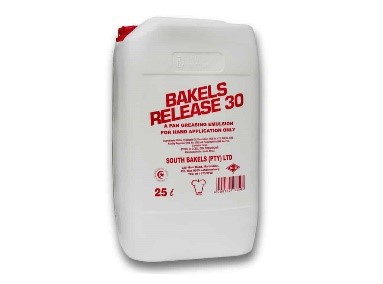 Release 30 is a white semi-viscous water in oil emulsion.
INTENDED USE:
A vegetable-based greasing emulsion suitable for all yeast raised goods and types of baking tins, sheets, trays etc.
RELEASE 30 is designed for application by hand. Intended for all types of consumers.
Tincol
White semi-viscous water in oil emulsion.
INTENDED USE:
A vegetable-based greasing emulsion suitable for all yeast-raised goods and types of baking tins, sheets, trays, etc.
The viscosity of TINCOL allows applications with a greasing unit or by hand. Intended for all types of consumers.
Tinglide

INTENDED USE:
A pan release emulsion specially formulated for the release of cakes, sponges and similar confectionery rich in sugar. Applied with a brush. Intended for all types of consumers.
THERMASPRAY

Thermaspray is the only licenced applicator of Teflon™ Industrial Bakeware Coatings in Southern Africa.
We apply Teflon™ coatings to new bakeware as well as re-coat existing bakeware in our ISO 9001 Quality Management facility in Olifantsfontein, Midrand.
Thermaspray has the expertise to specify of the most appropriate and durable non-stick coating for your production operations, in terms of the ingredients, the baking processes and the size and shape of the finished products.
We coat all industrial bakeware from flat trays to perforated trays and cake tins. We also coat industrial bakery equipment such as hoppers and mixer blades and many more.
Why should you choose Teflon™ Coatings?
- Reduce costs:
Bakeware can be used longer, and bakeries can eliminate secondary release agents such as oil, silicone mats, etc.
- Decrease cleaning time:
Maintenance and cleaning are minimised.
- Increase productivity:
Increase production volumes and reduce waste from sticking.
- Improve product quality:
Ensure product consistency with improved dough flow and release.
- Increase safety & cleanliness:
A safer environment, reduced fire hazards due to elimination of oils and grease.
- Enhance sustainability:
Limit environmental impact by reducing scrap levels, reducing consumption of oils and prolonging the life of your pans.
- Chemours Teflon™ quality assurance.
Teflon™ will fundamentally change your baking experience – increasing your baking cycles from 5 cycles for oils, 500 cycles with silicones, to as many as 5000 cycles with a Teflon™ coating.
To find out more about our Teflon™ Coatings for other industries, please click here – https://www.thermaspray.co.za/our-services/teflon.html
